Secure communication that works when nothing else does.
TAWK is one configurable protocol for messaging and alerting that keeps working with no Wi-Fi, no cell, and no cloud. The same secure mesh scales from a family safety device to schools, public safety, and critical infrastructure.
TAWK — Transport-agnostic, Asynchronous, Wide-area, Kinetic Keymesh. The first three words say how it behaves; the last two name what it is. Said aloud, it is just "talk."
The story of the name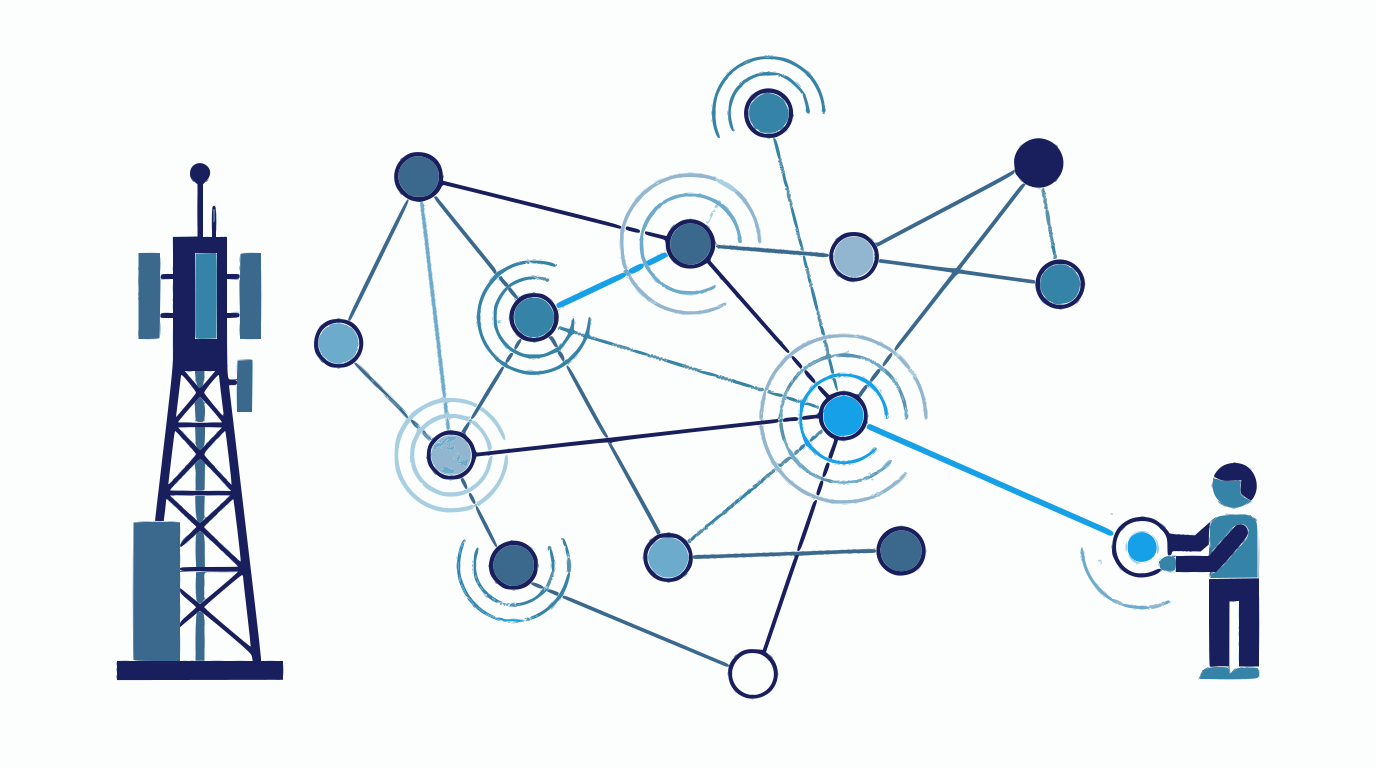
One set of properties, every deployment
These are not features bolted onto a product. They are properties of the protocol itself, so every device that speaks TAWK inherits them.
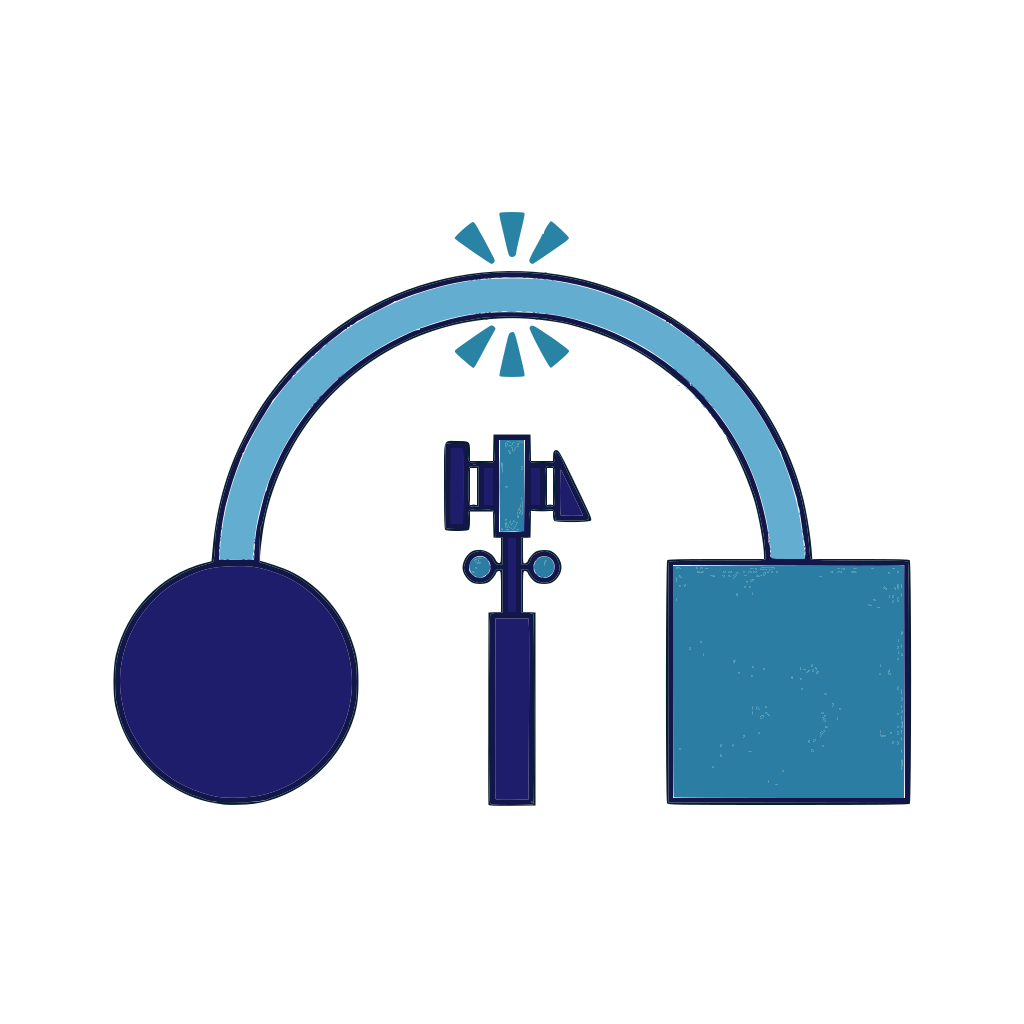
Works with no Wi-Fi, no cell, no cloud
TAWK is infrastructure-independent by design. Devices reach each other directly and pass messages along, so the network keeps working in exactly the moments other systems fail: outages, disasters, jamming, the dead zone, the lockdown.
Post-quantum from the ground up
Every message is protected with cryptography built to withstand both today's computers and tomorrow's quantum ones. This is the baseline of the protocol, not an upgrade you bolt on later.
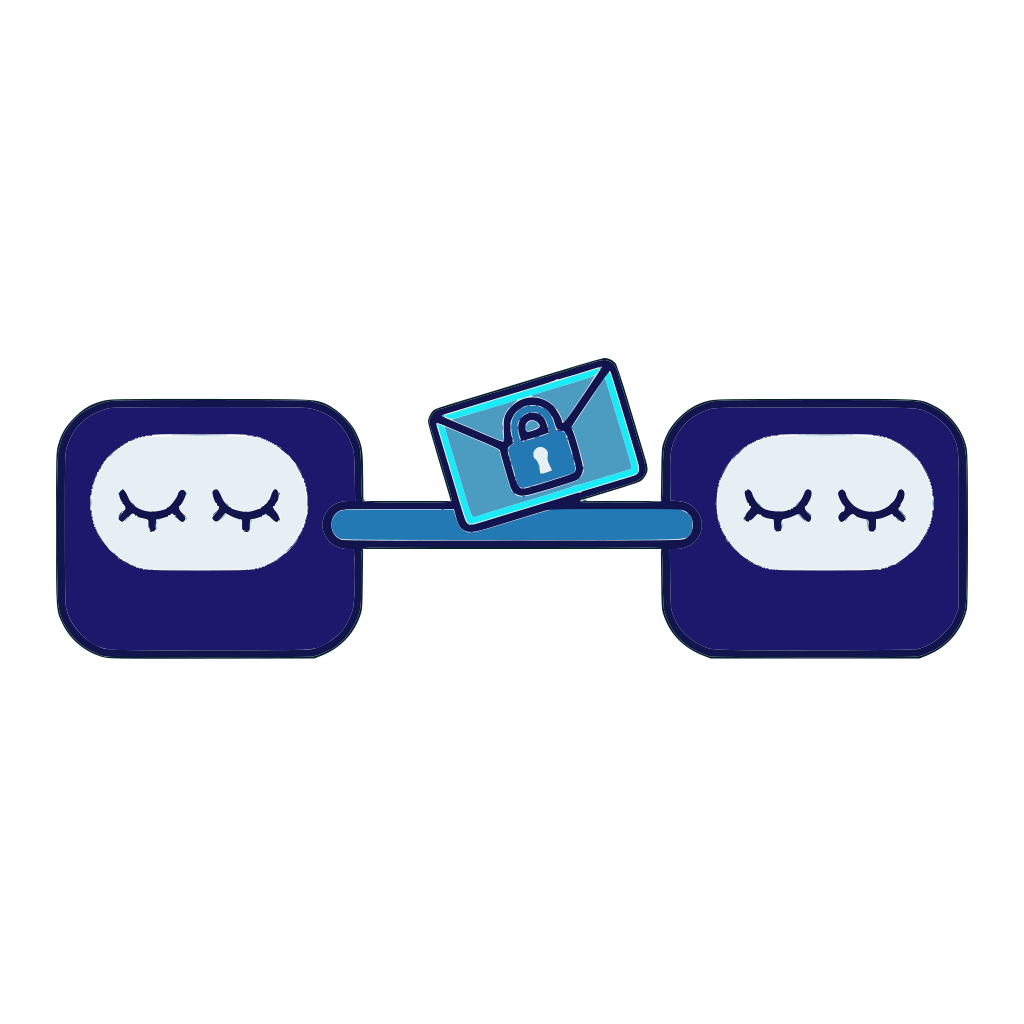
Private by design
Messages are bound to verified identities and the relays that carry traffic cannot read it. Devices help the network without learning what is being said or who is saying it.
Two-way and multi-purpose
One mesh carries alerts, messages, and quiet calls for help in both directions. You are not stacking up three single-purpose systems that do not talk to each other.

One protocol, many configurations
The same protocol scales from a single family device to a campus, an agency, or a hardened government deployment. What changes is the hardware around it, not the language the devices speak.

Open standard, no lock-in
TAWK is a documented, openly specified protocol. Multiple hardware makers can build compatible devices, so buyers are not trapped with a single vendor.
Proven on real hardware
TAWK is no longer only a specification. The protocol now runs on real devices, over real radios, and the properties on this page have been demonstrated end to end — not simulated.
One message, three different radios
A message left a device that speaks only one radio type and arrived at a device that speaks only another — relayed across three different radio technologies by devices in between. No tower, no cloud, and none of the relaying devices could read what they carried. This is the core promise of TAWK, demonstrated on physical hardware.
Small enough for a child’s device, strong enough for a coordinator
The complete protocol — including its post-quantum protection — runs on the kind of low-cost, low-power chips used in consumer devices, and scales up through desktop-class coordinators. Same protocol, every tier.
The post-quantum core is now dependency-clean
The reference implementation’s post-quantum core has been rebuilt to be dependency-clean — a single, auditable codebase that runs from tiny embedded chips to servers. Fewer moving parts means a smaller attack surface and a clearer path to formal validation.
From a family device to a hardened coordinator
TAWK is configurable and tunable, and the available hardware shapes what gets built. The reference configurations, reco0 through reco4, are documented, canonical builds for different settings. The protocol underneath is the same.
| Config | Who it's for | Coordinator | Trust class | Validation |
|---|---|---|---|---|
Reference Config 0 reco0 | Families, kids, individuals | No dedicated hardware required | TAWK-S | Full post-quantum core |
Reference Config 1 reco1 | Schools first, then campuses, venues, companies | Dedicated coordinator (appliance, on-prem, or existing HSM) | TAWK-S | Full post-quantum core |
Reference Config 2 reco2 | Responders and teams that need validated ground truth | Validated hardware root of trust required | TAWK-HA | FIPS 140-3 Level 2 class |
Reference Config 3 reco3 | Government and critical infrastructure | Hardened, validated coordinator | TAWK-HA | FIPS 140-3 Level 3 class |
Reference Config 4 reco4 | Environments where tamper-active protection is non-negotiable | Tamper-active, validated coordinator | TAWK-HA | FIPS 140-3 Level 4 class |
- Coordinator
- No dedicated hardware required
- Validation
- Full post-quantum core
- Coordinator
- Dedicated coordinator (appliance, on-prem, or existing HSM)
- Validation
- Full post-quantum core
- Coordinator
- Validated hardware root of trust required
- Validation
- FIPS 140-3 Level 2 class
- Coordinator
- Hardened, validated coordinator
- Validation
- FIPS 140-3 Level 3 class
- Coordinator
- Tamper-active, validated coordinator
- Validation
- FIPS 140-3 Level 4 class
Built consumer-first, with room to grow
The lead is family safety. The same protocol then scales into institutions and, as upside, into public safety and government, without changing the language the devices speak.
“Every TAWK reference configuration runs a full post-quantum cryptographic core. The baseline is not “less secure”, it carries full post-quantum protection from day one. What rises with the configuration is chiefly the independent hardware validation and physical tamper protection of the coordinator. You pick the configuration that matches your deployment, your hardware, and your validation requirements, same protocol underneath.”
Exploring a deployment, partnership, or pilot?
TAWK is developed by CK Consulting. We are happy to talk through how a configuration could fit your setting.