A network made of the devices themselves
TAWK is a protocol, the shared language compatible devices speak. It is built to keep communicating when the usual infrastructure is missing, and to protect what it carries. Here is the idea, without the parts that make it hard to copy.
A mesh of devices, not a tower
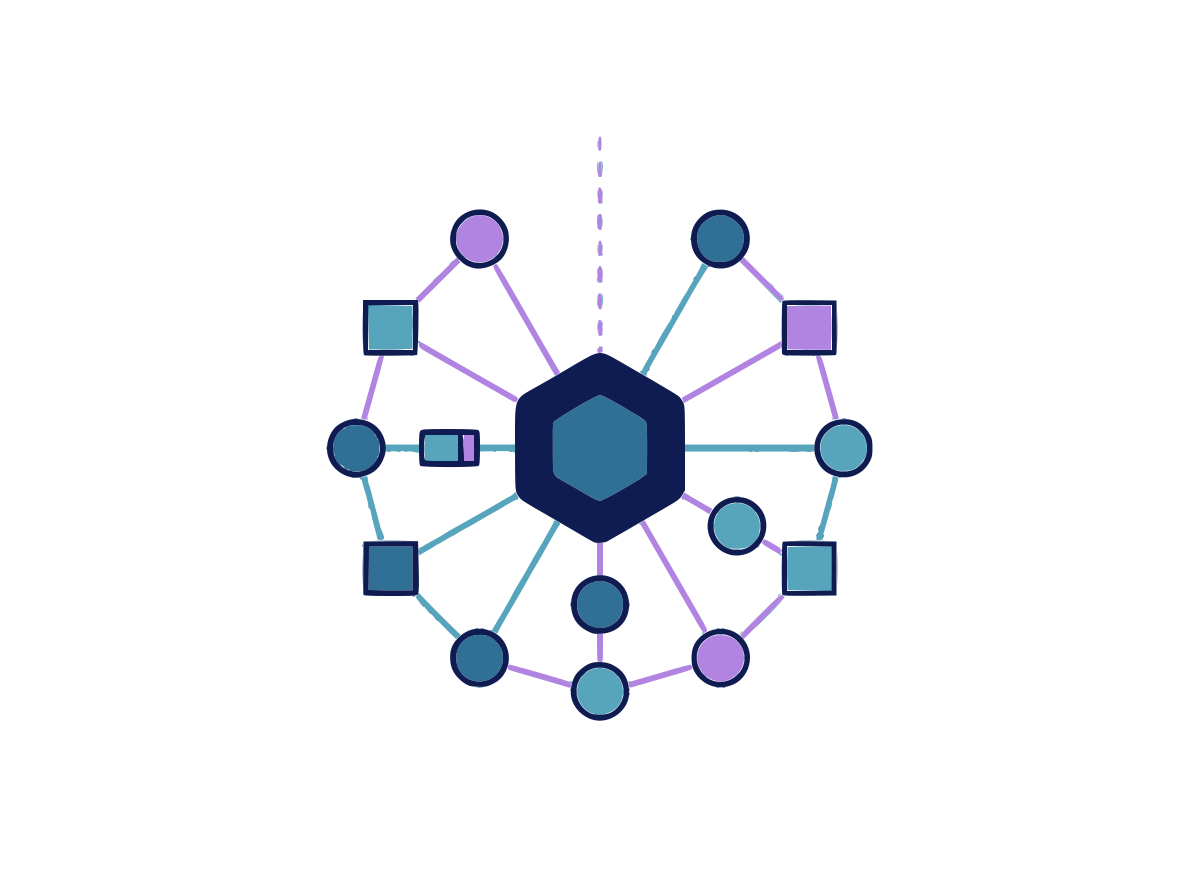
Instead of depending on a cell tower or router, TAWK devices form a local mesh. Each device can talk to its neighbors and relay for them, so coverage comes from the devices themselves. Add more devices and the network gets stronger, not weaker.
Carry-and-forward when there is no path
If a destination is offline or out of range, the network can hold a message and pass it on when a path opens up. Communication does not require everyone to be connected at the same instant.
Transport-agnostic
TAWK is not tied to one kind of radio. It is designed to run across short-range and long-range links, and to reach out over satellite or the internet when those happen to be available, all speaking the same protocol.
Identity you can trust
Each device has a cryptographic identity. Messages are signed and verified, so recipients know who really sent something and tampering is detectable. Trust is established deliberately, not assumed.
Blind relay
Relaying a message and reading a message are two different things. TAWK separates them: a device can faithfully forward traffic it is not allowed to open. The network stays helpful without becoming nosy.
A full post-quantum core, everywhere
From the smallest family device to the most hardened deployment, every configuration runs a full post-quantum cryptographic core — the baseline is not “less secure”. What higher configurations chiefly add is independently validated hardware and physical protection around that core.
The island model
For larger deployments, one local coordinator anchors a site, a school, a stadium, a base, into a trust domain. It manages the local devices and bridges out to responders, cellular, or the internet when those are reachable. Each site is an island that runs on its own, and many islands can federate into one network. Smaller deployments do not need dedicated hardware at all.
“Every TAWK reference configuration runs a full post-quantum cryptographic core. The baseline is not “less secure”, it carries full post-quantum protection from day one. What rises with the configuration is chiefly the independent hardware validation and physical tamper protection of the coordinator. You pick the configuration that matches your deployment, your hardware, and your validation requirements, same protocol underneath.”